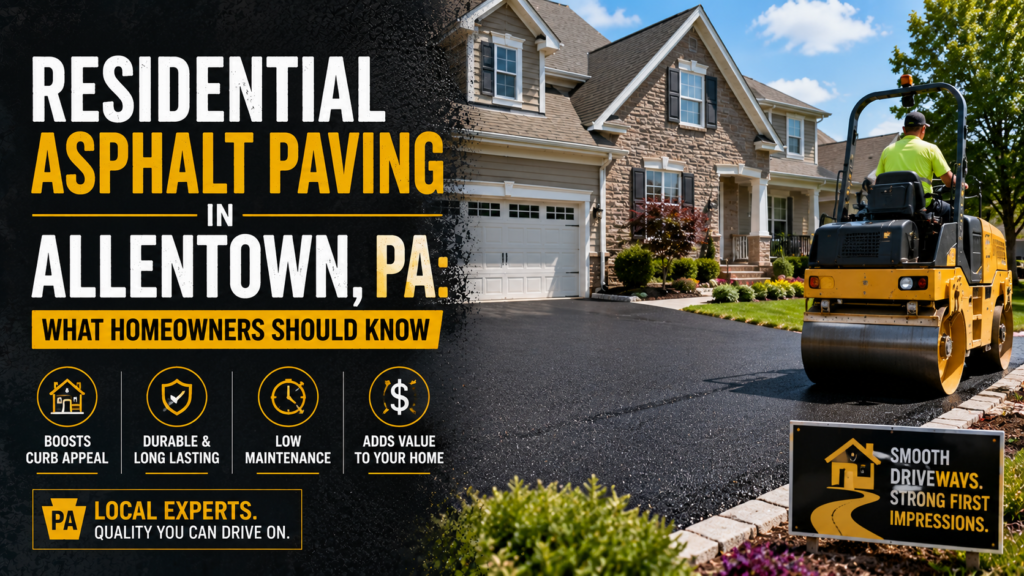
Allentown, Pennsylvania, is the largest city in the Lehigh Valley a region known for its diverse residential neighborhoods, its four-season climate, and its strong tradition of homeownership. For Allentown homeowners, Residential Asphalt Paving Allentown is a recurring consideration, whether the need involves installing a new driveway, resurfacing an existing one, or repairing damage accumulated over years of freeze-thaw cycling and heavy use. Understanding how asphalt paving works, why material and method choices matter, and what distinguishes quality residential work from inferior results helps homeowners make informed decisions about one of their property’s most visible features.
Why Asphalt Is the Preferred Material for Residential Paving
Asphalt has been a dominant residential paving material for decades, and for good reason. It offers a combination of durability, cost-effectiveness, quick installation, and performance under the specific conditions of a Pennsylvania climate that makes it a practical choice for most homeowners. Asphalt is flexible, which allows it to expand and contract with temperature changes an important property in a region where temperatures swing dramatically between summer heat and winter cold. This flexibility reduces the risk of cracking compared to more rigid paving materials.
Asphalt also drains water quickly when properly sloped, reducing the pooling that can undermine a driveway’s structural base over time. It is darker than concrete, which causes it to absorb heat and shed ice and snow more quickly a practical advantage during Allentown’s winter months. With proper maintenance, including periodic sealcoating, a well-installed residential asphalt driveway can last twenty to thirty years or more.
The Residential Asphalt Paving Process
A properly executed residential asphalt paving project is far more involved than simply laying a layer of blacktop. The quality and longevity of the finished product depend heavily on what happens beneath the surface, during the preparation phase.
The process begins with site assessment and planning. A qualified paving contractor evaluates the existing surface conditions, drainage patterns, soil stability, and the intended use of the paved area. For new installations, this includes determining the appropriate depth and composition of the aggregate base layer that will support the asphalt above.
Excavation and grading come next. Existing pavement or surface materials are removed, the sub-grade is excavated to the required depth, and the soil is compacted to create a stable foundation. Proper grading at this stage ensures that the finished surface slopes away from structures to direct water drainage a critical factor in preventing long-term sub-base erosion.
The aggregate base is then placed and compacted. This layer of crushed stone typically ranges from four to eight inches in depth for residential driveways, depending on soil conditions and expected traffic loads. The base is the foundation of the entire system; a properly installed base significantly extends the lifespan of the asphalt above it.
Asphalt is then laid and compacted using specialized paving and rolling equipment. The hot-mix asphalt typically two to three inches thick for residential applications is applied in even layers and compacted while still hot to achieve the density required for durability. Edging and finishing complete the installation, creating clean lines and a smooth, professional appearance.
The Importance of Proper Base Preparation
Experienced paving contractors emphasize that the condition of the sub-base is the single most important factor in determining how long a residential asphalt surface will last. Asphalt is only as strong as what supports it. A driveway installed over a poorly compacted, unstable, or inadequately deep base will develop cracks, depressions, and premature failures regardless of the quality of the asphalt mix applied on top.
In Allentown’s climate, where frost penetrates the ground to depths that can exceed twelve to eighteen inches in severe winters, the sub-base must be prepared with frost heave in mind. Proper drainage, adequate base depth, and correct aggregate gradation all contribute to a base that can accommodate the movement that freeze-thaw cycling imposes on the soil beneath a paved surface.
Maintenance: Extending the Life of Residential Asphalt
Even the best-installed residential asphalt requires ongoing maintenance to achieve its maximum lifespan. Sealcoating is the most important maintenance practice for asphalt driveways. Applied every three to five years, a quality sealcoat protects the asphalt from ultraviolet oxidation, water infiltration, fuel and oil spills, and the general wear of weather and use. Without sealcoating, asphalt oxidizes and becomes brittle, accelerating crack formation and surface deterioration.
Crack sealing is another essential maintenance step. Small cracks that appear on the surface should be filled promptly with appropriate crack filler. If left unaddressed, water infiltrates the cracks, freezes in winter, expands, and widens the crack into a progressively larger defect. What begins as a hairline crack can evolve into a pothole if not treated early.
Keeping the surface clean of organic debris leaves, mulch, and plant material that can retain moisture and promptly removing tree sap and oil spills further extends the life of a residential asphalt surface.
New Installation vs. Resurfacing
Many Allentown homeowners face the question of whether to resurface an existing driveway or install an entirely new one. The right answer depends on the condition of the existing base and surface. If the sub-base is structurally sound but the asphalt surface has deteriorated through oxidation, minor cracking, and general wear, resurfacing applying a new layer of asphalt over the existing surface can restore appearance and performance at a fraction of the cost of full replacement.
If, however, the existing surface shows extensive cracking, depressions, potholes, or signs of base failure (areas where the pavement flexes or moves underfoot), resurfacing alone will not solve the problem. In these cases, full removal of the existing asphalt, assessment and repair of the base, and new installation is the appropriate approach.
Residential Asphalt Paving and Property Value
A well-maintained, professionally installed asphalt driveway has a measurable effect on a property’s curb appeal and market value. The driveway is one of the first things a visitor or prospective buyer sees when approaching a home, and its condition sends a signal about how the property as a whole is maintained. A fresh, smooth driveway conveys care and attention; a cracked, potholed, or oil-stained surface conveys the opposite. For homeowners in Allentown who are considering selling, renovating, or simply improving their property, residential asphalt paving is an investment with tangible returns.
Conclusion
Residential asphalt paving in Allentown is a skilled craft that combines careful site preparation, quality materials, and expert installation to produce surfaces that perform reliably over many years. Understanding the process from sub-base preparation through finished surface maintenance empowers homeowners to evaluate contractors effectively, maintain their investment well, and make informed decisions when their driveway needs attention. In a region with demanding climate conditions, quality residential paving is not a luxury but a practical necessity.