Queue Management System in Saudi Arabia: 7 Ways It Transforms Customer Flow in 2026
Waiting is the silent killer of good service. A single frustrating line can undo a great product, a fair price, and a friendly team. That is why a modern queue management system in Saudi Arabia has moved from luxury to necessity across banks, hospitals, telecom stores, and government service centers in 2026.
This article explains, in plain terms, how these systems work, the seven biggest ways they change customer flow, and how to pick a solution that fits Saudi expectations for speed, fairness, and Arabic-first service.
Understanding the Modern Queue Management System
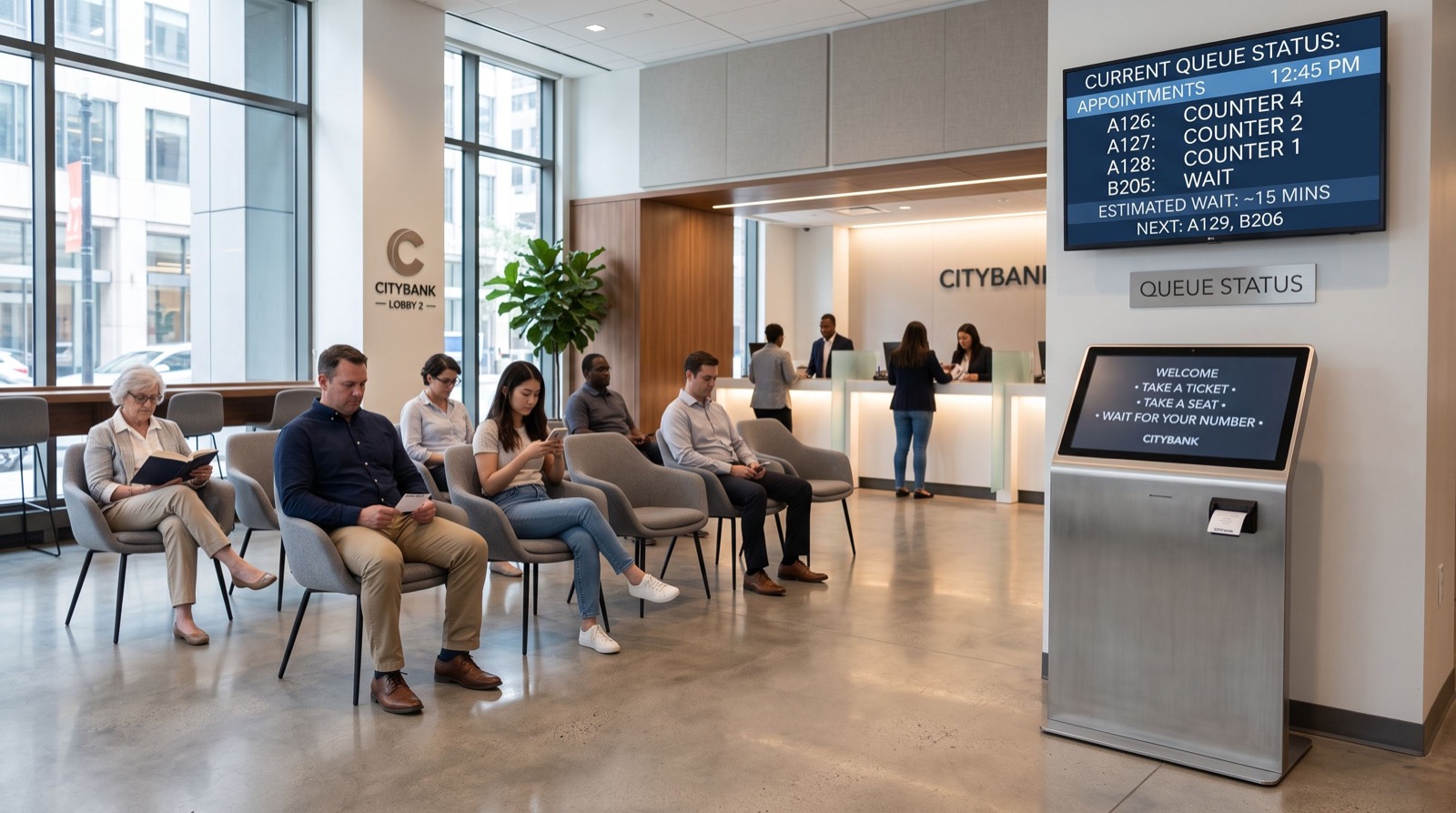
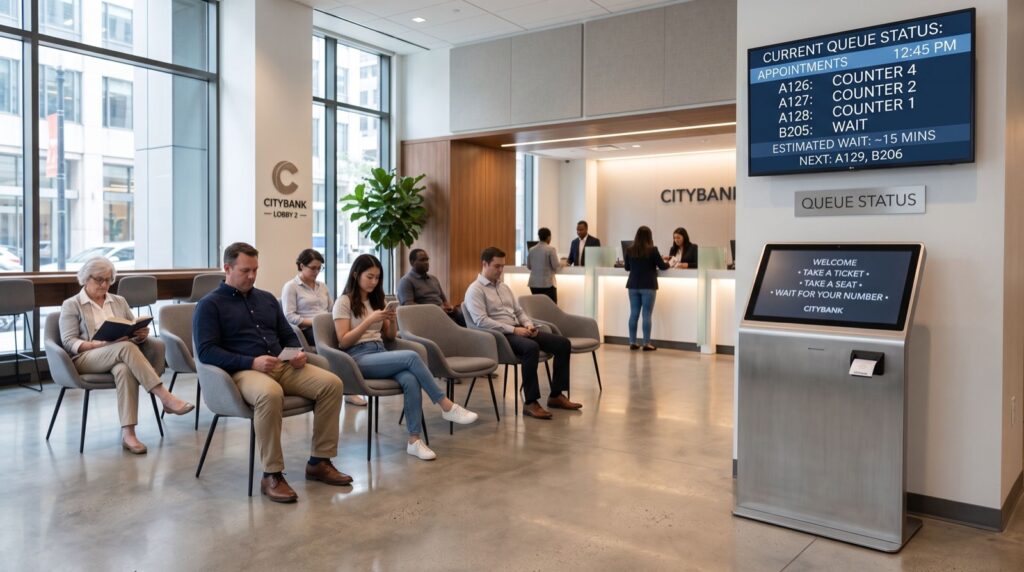
At its core, a queue management system replaces the physical line with an organized, data-driven flow. Customers check in at a kiosk or on their phone, receive a virtual ticket, and wait comfortably until a display and announcement call them forward.
Behind the scenes, the platform records every step: arrival time, wait duration, service time, and outcome. Managers use that data to staff smarter and spot bottlenecks before they become complaints. The McKinsey research on customer experience repeatedly shows that reducing friction at these touchpoints directly lifts loyalty and revenue.
In the Kingdom, a capable queue management system in Saudi Arabia is expected to run bilingually, respect prayer-time scheduling, and scale across multiple branches without adding staff overhead.
7 Ways It Transforms Customer Flow
- Eliminates physical crowding. Visitors sit and relax instead of standing in a tense line.
- Guarantees fairness. Transparent first-come logic ends “who was next?” arguments.
- Cuts perceived wait time. Live progress updates make waits feel shorter.
- Routes by service type. Quick tasks never get stuck behind complex ones.
- Enables mobile check-in. Customers join the queue before they arrive.
- Feeds real-time analytics. Managers react to surges as they happen.
- Improves staff morale. Agents serve calmly instead of managing chaos.
Every one of these gains compounds. A store that fixes crowding and adds mobile check-in often sees abandonment fall sharply within the first month.
Why Local Expertise Changes the Result
Software alone rarely delivers these benefits. Configuration, Arabic localization, and integration with existing systems decide whether a deployment sings or stumbles. Working with reliable local experts means your ticket logic, signage, and reporting match how your customers actually behave.
Beyond the Branch: Drive-Thru and Omnichannel Queuing
Queue management no longer stops at the front door. Fast-service brands, pharmacies, and food outlets increasingly extend the same discipline to their lanes. A modern Drive-thru Systems in Saudi Arabia setup applies queuing logic to vehicles: timing each stage, coordinating order and pickup windows, and measuring service speed per lane.
The principle is identical. Whether the customer is on foot or in a car, the system measures wait, balances load, and surfaces the data managers need to improve. Unifying in-branch and drive-thru flow under one analytics roof gives leadership a complete picture of service performance.
Where Drive-Thru Queuing Delivers Most
- Pharmacies: Prescription pickup without leaving the vehicle.
- Quick-service restaurants: Faster order-to-handoff times during rush.
- Banking and telecom: Contactless document drop-off and collection.
Comparing Queue Management Tiers
Match the tier to your traffic. The table below outlines what each level typically includes in 2026.
| Capability | Starter | Professional | Enterprise |
|---|---|---|---|
| Virtual ticketing | Yes | Yes | Yes |
| Mobile / QR check-in | No | Yes | Yes |
| Drive-thru module | No | Optional | Yes |
| Multi-branch dashboard | No | Single site | Unlimited |
| Predictive staffing AI | No | No | Yes |
How to Choose the Right System
Buying well is mostly about asking the right questions. Use this quick framework before signing anything.
- Localization: Is Arabic truly first-class, not an afterthought?
- Scalability: Can it grow from one branch to fifty without a rebuild?
- Integration: Does it connect to CRM, telephony, and SMS gateways?
- Support: Is there local, same-day service and spare-parts availability?
- Evidence: Can the vendor show a live Saudi reference site?
A Practical Tip Most Buyers Miss
Turn on customer feedback capture from day one, but keep it to a single tap: happy, neutral, unhappy. Overlong surveys get ignored. That one-tap rating, tied to the exact agent and wait time, becomes the most honest coaching data your managers will ever get.
The 2026 Outlook
Expect three trends to accelerate this year. First, AI-driven staffing that predicts rushes before they hit. Second, deeper drive-thru integration as contactless habits stick. Third, tighter links between queuing, telephony, and CRM so the customer journey feels seamless from arrival to follow-up.
Organizations that invest now build a data advantage competitors cannot easily copy. Each served customer adds to a growing library of insight that sharpens every future decision.
Building the Business Case for Queuing
Decision-makers rightly ask what they get for the spend. The honest answer is that queuing pays back in both hard and soft returns, and the hard returns are easy to measure.
A properly configured queue management system in saudi arabia typically lifts throughput without adding headcount. When agents stop policing the line and start serving, each counter handles more customers per hour. That single shift often justifies the entire investment.
- Hard returns: More transactions per hour, fewer walkaways, leaner staffing.
- Soft returns: Higher satisfaction scores, calmer staff, stronger brand reputation.
- Strategic returns: A growing dataset that sharpens every future decision.
Common Pitfalls to Sidestep
Even strong platforms disappoint when these errors slip in. Learn from others rather than repeating their mistakes.
- Over-categorizing services, which confuses customers at the kiosk.
- Ignoring the analytics, leaving valuable insight unused month after month.
- Skipping staff training, so useful features like transfers go untouched.
- Neglecting Arabic localization, alienating a large share of visitors.
Avoiding these traps is mostly about discipline: keep the customer choices simple, review the data monthly, and treat training as ongoing rather than a one-time event at launch.
Frequently Asked Questions
What makes a queue management system in Saudi Arabia different from a generic one?
Local systems prioritize Arabic-first interfaces, prayer-time-aware scheduling, and compliance with Saudi service standards, alongside strong local support and spare-parts availability.
Can the same system handle both in-branch and drive-thru queues?
Yes. Enterprise platforms unify foot traffic and vehicle lanes under one dashboard, so managers see total service performance in a single view.
How quickly will we see results?
Most organizations notice shorter perceived waits and fewer abandonments within the first month, with staffing efficiency gains following as analytics mature.
Do customers need to download an app?
Not necessarily. QR-based check-in works from any phone browser, while a dedicated app is optional for high-volume or loyalty-driven brands.
Conclusion
A modern queue management system in Saudi Arabia is no longer just about numbers on a screen — it is a complete customer-flow engine spanning branches, drive-thru lanes, and the data behind them. Start with a clear map of your peak-hour pain, choose a scalable platform backed by reliable local experts, and pilot before you scale. In 2026, the businesses that master the wait are the ones that win the loyalty.